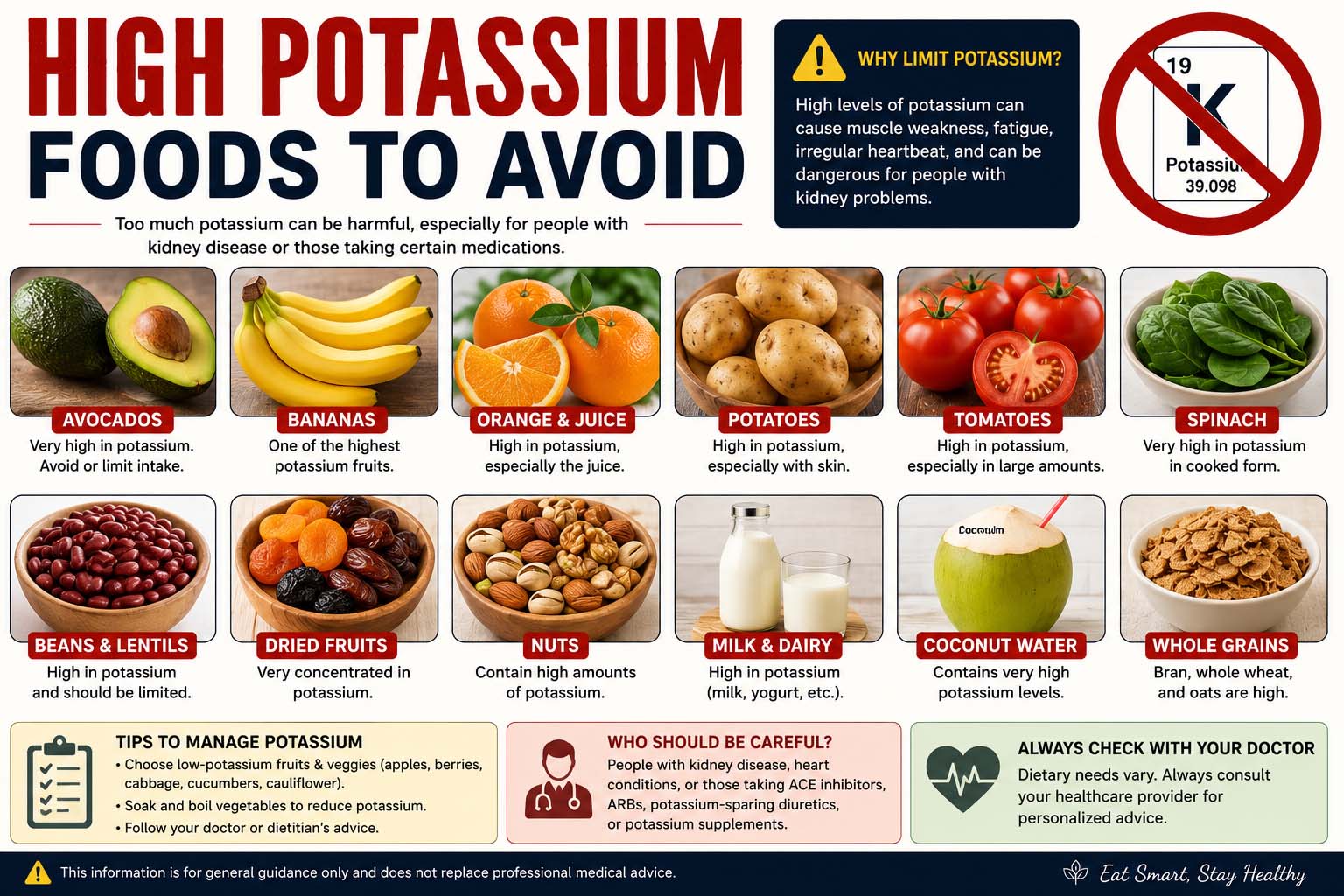
Knowing which high potassium foods to avoid can help people with kidney disease or elevated blood potassium make safer dietary choices. Although potassium is essential for normal body function, excessive levels in the bloodstream can become dangerous when the kidneys cannot remove it efficiently.
For most healthy people, potassium-rich foods support good nutrition. However, people with chronic kidney disease, hyperkalemia, or certain medical conditions may need to limit specific foods.
Fortunately, following a potassium-conscious diet doesn’t mean eliminating every fruit, vegetable, or nutritious meal. Instead, the goal is to manage portions and select foods that fit your individual medical needs.
This guide explains which foods may require limits, how potassium affects the body, and which alternatives may fit a lower-potassium eating plan. In addition, you’ll learn about symptoms, possible causes, treatment, and common dietary mistakes.
Why Potassium Matters and When to Limit It
Potassium is an essential mineral and electrolyte that supports several important body functions.
For example, potassium helps:
- Maintain normal muscle function
- Support healthy nerve signals
- Regulate heart rhythm
- Balance fluid inside cells
- Support muscle contractions
- Maintain normal blood pressure
In addition, potassium works alongside sodium to help regulate fluid balance and electrical activity in the body.
Most healthy people can include potassium-rich foods in a balanced diet. However, certain medical conditions and medications can interfere with potassium regulation.
As a result, potassium may accumulate in the bloodstream and cause hyperkalemia.
Who Should Avoid High-Potassium Foods?
Most healthy adults do not need to restrict potassium-rich foods.
However, healthcare professionals may recommend potassium limits for people with specific medical conditions.
These include:
- Chronic kidney disease
- Kidney failure
- Hyperkalemia
- Certain adrenal gland disorders
- Some cases of acute kidney injury
- People taking medications that increase blood potassium
For example, some blood pressure medications can increase potassium levels. In addition, potassium supplements and certain salt substitutes may contribute to excessive intake.
Nevertheless, not everyone with kidney disease requires the same dietary restrictions.
Therefore, your healthcare provider should determine whether you need a potassium limit based on blood tests, kidney function, medications, and overall health.
Common High Potassium Foods to Avoid or Limit
The phrase high potassium foods to avoid usually refers to foods that people with elevated blood potassium may need to reduce rather than eliminate completely.
Many nutritious foods contain substantial amounts of potassium. However, their suitability depends on portion size, preparation, and individual medical needs.
| Food | General Potassium Consideration |
|---|---|
| Bananas | Can contribute significant potassium per serving |
| Avocados | Potassium-rich fruit |
| Potatoes | Often high in potassium |
| Sweet potatoes | Potassium-rich root vegetable |
| Tomatoes | Potassium content increases with concentrated products |
| Tomato sauce | Can provide substantial potassium |
| Cooked spinach | Often high in potassium per serving |
| Winter squash | Can contain substantial potassium |
| Dried fruit | Concentrated source of potassium |
| Beans | Potassium varies by type and portion |
| Lentils | Can contribute substantial potassium |
| Coconut water | Often contains significant potassium |
Although these foods may require limits, they aren’t automatically harmful.
For example, someone with normal kidney function may benefit from eating bananas, beans, and leafy greens.
In contrast, a person with persistent hyperkalemia may need to adjust serving sizes or choose alternatives.
Therefore, follow an individualized eating plan rather than avoiding every food on this list.
High-Potassium Fruits to Avoid or Limit
Fruits provide vitamins, antioxidants, and dietary fiber. However, some fruits contain more potassium than others.
Examples include:
- Bananas
- Oranges
- Kiwi
- Mango
- Cantaloupe
- Honeydew melon
- Dried apricots
- Raisins
Are Bananas Too High in Potassium?
Bananas contain potassium, so people following a restricted diet may need to control their portions.
However, bananas aren’t automatically forbidden for everyone with kidney disease.
For example, some people may tolerate a smaller serving as part of their daily potassium allowance. Others may need stricter limits because of elevated blood potassium.
People interested in the best time to eat banana should remember that eating time does not eliminate potassium from the fruit.
Therefore, portion size and medical guidance matter more than whether you eat a banana in the morning or evening.
Dried Fruits and Concentrated Potassium
Dried fruits can contain substantial potassium in relatively small portions.
For example, dried apricots and raisins contain less water than fresh fruit, making it easier to consume a larger amount of fruit in one sitting.
As a result, people limiting potassium may need to pay closer attention to dried-fruit portions.
Instead, fresh fruits such as apples, grapes, or berries may provide lower-potassium options in suitable serving sizes.
High-Potassium Vegetables to Avoid or Reduce
Vegetables support overall health, but their potassium content varies considerably.
Some vegetables that may require portion limits include:
- Potatoes
- Sweet potatoes
- Spinach
- Swiss chard
- Beet greens
- Tomatoes
- Mushrooms
- Winter squash
For example, baked potatoes can contain substantial potassium. Meanwhile, concentrated tomato products may provide more potassium per serving than smaller amounts of fresh tomato.
However, cooking methods can affect the amount of potassium in certain vegetables.
Can Cooking Reduce Potassium?
Boiling some vegetables in water and discarding the cooking liquid can reduce their potassium content.
For instance, cutting potatoes into smaller pieces before boiling may help potassium move into the cooking water.
However, the amount removed depends on the vegetable, preparation method, and cooking conditions.
In addition, boiling does not make every high-potassium food suitable for an unrestricted diet.
Therefore, ask a renal dietitian whether this preparation method fits your meal plan.
High Potassium Foods to Avoid With Hyperkalemia
When blood potassium is elevated, healthcare professionals may recommend reducing foods that contribute substantial potassium.
Examples include:
- Large servings of bananas
- Tomato juice
- Tomato paste
- Baked potatoes
- French fries made from potatoes
- Avocados
- Dried fruit
- Coconut water
- Certain beans and lentils
- Large portions of cooked leafy greens
However, dietary restrictions depend on the cause and severity of hyperkalemia.
For example, someone with mild elevations may need different recommendations from a patient receiving dialysis.
Therefore, do not assume that removing a few foods will correct dangerously elevated blood potassium.
Medical assessment remains essential.
High Potassium Foods to Avoid With Kidney Disease
People with chronic kidney disease may have difficulty removing excess potassium from their blood.
As kidney function declines, potassium regulation can become more challenging. However, potassium levels do not rise in every person with kidney disease.
Therefore, dietary advice should reflect individual blood test results and treatment needs.
Healthcare professionals may recommend:
- Monitoring serving sizes
- Choosing suitable lower-potassium alternatives
- Reviewing nutrition labels
- Limiting potassium-containing salt substitutes
- Following a personalized meal plan
- Consulting a registered dietitian
For example, someone with normal potassium blood levels may not need the same restrictions as someone with recurrent hyperkalemia.
The National Kidney Foundation’s guidance on potassium and chronic kidney disease provides additional information about managing potassium intake.
In addition, people receiving dialysis may have different dietary requirements depending on their treatment and laboratory results.
Never make major dietary changes without medical guidance if you have kidney disease.
Symptoms of High Potassium Levels
High blood potassium, also called hyperkalemia, may cause no noticeable symptoms.
However, some people experience symptoms when potassium levels become elevated.
Possible symptoms include:
- Muscle weakness
- Fatigue
- Numbness or tingling
- Heart palpitations
- Irregular heartbeat
- Nausea
Unfortunately, symptoms alone cannot reliably determine whether potassium levels are dangerously high.
For example, a person may have significant hyperkalemia without obvious warning signs.
Severely elevated potassium can interfere with the heart’s electrical activity and cause life-threatening complications.
Therefore, seek emergency medical care if you experience chest pain, fainting, severe weakness, or symptoms suggesting a serious heart rhythm problem.
If a healthcare professional tells you that your potassium level is dangerously high, follow their urgent treatment instructions even if you feel well.
Lower-Potassium Alternatives to High-Potassium Foods
Fortunately, many nutritious foods contain less potassium per typical serving than common high-potassium choices.
However, the total amount still depends on portion size and preparation.
Lower-Potassium Fruits
Possible choices include:
- Apples
- Grapes
- Blueberries
- Strawberries
- Pineapple
For example, an apple may be a suitable alternative to a large banana for someone following a potassium-restricted eating plan.
In addition, berries can provide flavor and dietary fiber without requiring large portions.
Lower-Potassium Vegetables
Common options include:
- Cabbage
- Cauliflower
- Cucumbers
- Lettuce
- Green beans
For instance, cauliflower may replace potatoes in certain meals.
Meanwhile, cabbage and lettuce can add variety to salads and side dishes.
However, eating very large portions of lower-potassium foods can still increase total potassium intake.
Therefore, serving sizes remain important.
Fiber and Kidney-Friendly Nutrition
Fiber supports digestive health and contributes to a balanced diet.
However, fiber content and potassium content are different nutritional considerations.
For example, some beans and whole grains provide substantial fiber but may also contain considerable potassium.
People exploring foods high in fiber should therefore compare potassium levels when choosing foods for a kidney-friendly diet.
In addition, a renal dietitian can help maintain adequate fiber intake without exceeding an individualized potassium allowance.
Drinks High in Potassium to Avoid or Limit
Beverages can contribute significant potassium, especially when they contain concentrated fruits or vegetables.
Examples include:
- Coconut water
- Tomato juice
- Vegetable juice
- Certain fruit smoothies
- Some nutritional drinks
For example, coconut water naturally contains potassium and may not suit someone who needs strict potassium control.
Meanwhile, tomato juice can provide a concentrated source of potassium.
Therefore, checking beverage ingredients is just as important as reviewing solid foods.
Is Cucumber Water a Better Choice?
Plain water contains negligible potassium.
In addition, water infused with a few cucumber slices generally contributes much less potassium than coconut water or tomato juice.
However, the amount depends on the ingredients and preparation.
People with advanced kidney disease may also need to follow fluid restrictions.
Therefore, ask your healthcare provider how much fluid you should drink rather than assuming extra water is always beneficial.
Can You Eat Healthy on a Low-Potassium Diet?
Yes. A potassium-conscious diet can still include a wide variety of nutritious foods.
However, successful meal planning requires attention to both food choices and portions.
A balanced approach may include:
- Suitable fruits and vegetables
- Appropriate protein sources
- Recommended portions of grains
- Adequate dietary fiber
- Individualized fluid guidance
- Regular nutrition monitoring
For example, a meal might include a suitable portion of protein, white rice, and a lower-potassium vegetable.
Nevertheless, people with kidney disease may also need to monitor sodium, phosphorus, protein, or fluid intake.
Therefore, a registered dietitian can help create a plan that meets several nutritional requirements at once.
What Causes High Potassium Levels?
Hyperkalemia can develop for several reasons.
Common causes include:
- Chronic kidney disease
- Acute kidney injury
- Certain blood pressure medications
- Potassium supplements
- Adrenal gland disorders
- Uncontrolled diabetes in some circumstances
- Potassium-containing salt substitutes
For example, reduced kidney function can make potassium removal less efficient.
In addition, some medications affect the body’s ability to regulate potassium.
However, high dietary potassium intake alone rarely causes hyperkalemia in people with normal kidney function.
Therefore, identifying the underlying cause is essential before making treatment decisions.
How Doctors Diagnose High Potassium
Healthcare professionals typically diagnose hyperkalemia through a blood test.
If the result shows elevated potassium, they may recommend additional testing.
Possible assessments include:
- Repeat potassium testing
- Kidney function tests
- Medication review
- Other blood tests
- Electrocardiogram (ECG), when appropriate
For example, an ECG can help identify heart rhythm changes associated with elevated potassium.
In addition, repeat testing may help determine whether a blood sample issue contributed to an unexpectedly high result.
Therefore, healthcare professionals interpret potassium results alongside symptoms, medical history, and other laboratory findings.
Treatment Options for Hyperkalemia
Treatment depends on potassium levels, symptoms, heart rhythm findings, and the underlying cause.
Possible approaches include:
- Reviewing or adjusting medications
- Managing dietary potassium intake
- Treating underlying medical conditions
- Using prescribed potassium-lowering medications
- Providing emergency treatment when necessary
- Dialysis in certain severe cases
For example, a clinician may prescribe medication to help remove excess potassium.
However, severe hyperkalemia may require urgent hospital treatment to protect the heart and lower potassium levels.
Therefore, dietary changes alone are not appropriate treatment for every case.
Never stop prescribed medication or begin potassium-lowering treatment without professional guidance.
High Potassium Foods to Avoid: Better Food Substitutions
The following table provides general food substitutions that may help people manage potassium intake.
| Higher-Potassium Food | Potential Lower-Potassium Alternative |
|---|---|
| Banana | Apple |
| Avocado | Grapes |
| Baked potato | White rice |
| Sweet potato | Cauliflower |
| Cooked spinach | Lettuce |
| Tomato sauce | Cucumber-based side dish |
| Dried apricots | Blueberries |
| Coconut water | Plain water |
However, these substitutions are not nutritionally identical.
For example, white rice provides different nutrients from potatoes, while cucumber does not replace every nutritional benefit of tomato sauce.
Therefore, use this table as a starting point rather than a complete meal plan.
In addition, remember that preparation methods and serving sizes affect potassium intake.
Meal Planning Tips for a Low-Potassium Diet
Managing high potassium foods to avoid or limit becomes easier when you plan meals in advance, check portion sizes, and follow your healthcare provider’s dietary recommendations.
Check Portion Sizes
First, review how much of each food you normally eat.
For example, a large serving may contain considerably more potassium than a smaller portion of the same food.
Therefore, measuring portions can help you follow your prescribed dietary limits.
Read Food Labels Carefully
Next, check packaged foods for potassium-containing ingredients and any available potassium information.
Some products contain potassium additives or potassium chloride as a salt substitute.
However, nutrition labels may not provide every detail needed to assess a food’s suitability.
Therefore, ask a dietitian about products that you use regularly.
Choose Suitable Cooking Methods
Cooking can change the potassium content of certain foods.
For example, boiling vegetables and discarding the water may reduce potassium in some cases.
However, roasting or baking does not produce the same potassium-reduction effect.
As a result, preparation methods can matter when planning meals.
Follow Individual Medical Advice
Finally, review your dietary plan with a healthcare professional.
For instance, a person with kidney disease may have different requirements from someone taking a medication that raises potassium.
Therefore, personalized guidance is safer than following a generic food restriction list.
Common Myths About High-Potassium Foods
Several misconceptions can make potassium management unnecessarily confusing.
Myth: Everyone Should Avoid Potassium-Rich Foods
This is false.
Most healthy people benefit from potassium-rich foods as part of balanced nutrition.
For example, fruits, vegetables, beans, and other nutritious foods provide potassium alongside essential nutrients.
However, people with certain medical conditions may require restrictions.
Myth: All Fruits Are Too High in Potassium
Not all fruits contain the same amount of potassium.
For example, apples, grapes, and many berries generally contain less potassium per typical serving than bananas or dried apricots.
Therefore, suitable fruit choices can remain part of a potassium-conscious eating plan.
Myth: Drinking More Water Always Lowers Potassium
Drinking additional water does not reliably correct hyperkalemia.
Although adequate hydration supports normal body function, damaged kidneys may struggle to remove excess potassium.
In addition, some patients with kidney failure must limit fluid intake.
Therefore, follow individualized hydration recommendations.
Should You Avoid High-Potassium Fruit and Vegetable Juices?
Juicing can provide vitamins and other nutrients. However, some juices contain substantial potassium because they combine concentrated portions of fruits or vegetables.
For example, a large smoothie containing bananas and other potassium-rich ingredients may contribute significant potassium.
People interested in the benefits of juicing should therefore consider ingredient selection and serving size.
In addition, juicing often removes some of the fiber found in whole fruits and vegetables.
As a result, whole fruits may offer nutritional advantages when their potassium content fits your dietary plan.
If you follow a potassium restriction, ask your healthcare provider which juices and smoothies are suitable.
What About Protein Supplements?
Protein powders vary in their nutritional composition.
Some contain substantial potassium, while others contain relatively small amounts.
For example, certain products include added minerals or ingredients that increase their potassium content.
Therefore, checking the nutrition label is especially important for people with kidney disease.
If you’re comparing the best protein powder, consider more than protein content alone.
In addition, review potassium, phosphorus, sodium, and other nutrients when your healthcare provider recommends monitoring them.
Because protein requirements can differ among people with kidney disease, ask a renal dietitian before adding supplements to your routine.
Common Mistakes When Avoiding High-Potassium Foods
A few common mistakes can make dietary management less effective.
Assuming Every Healthy Food Is Suitable
Many nutritious foods naturally contain substantial potassium.
For example, avocados and spinach provide valuable nutrients but may require portion limits for certain patients.
Therefore, food choices should reflect individual medical requirements.
Ignoring Serving Sizes
Even foods with relatively low potassium content contribute to daily intake.
For instance, eating several large portions can increase total potassium consumption.
As a result, portion control matters alongside food selection.
Making Major Changes Without Medical Advice
Not everyone benefits from a low-potassium diet.
In fact, unnecessary potassium restriction can reduce dietary variety and make it harder to meet nutritional needs.
Therefore, avoid eliminating major food groups without professional guidance.
Forgetting About Salt Substitutes
Some salt substitutes contain potassium chloride.
For example, a product marketed as lower in sodium may still provide substantial potassium.
Consequently, people with hyperkalemia should review ingredient labels and ask their healthcare provider before using these products.
Frequently Asked Questions About High-Potassium Foods
What Not to Eat When Your Potassium Is High?
Foods that may require limits include bananas, potatoes, avocados, cooked spinach, dried fruit, tomato products, and coconut water.
However, the exact restrictions depend on your potassium level, kidney function, and treatment plan.
Therefore, ask your healthcare provider which foods and portions are appropriate.
Are Bananas Always Off Limits?
No. Some people can include small portions of banana in their eating plans.
However, others may need stricter limits because of recurrent hyperkalemia.
Therefore, follow personalized dietary advice.
Can I Still Eat Vegetables on a Low-Potassium Diet?
Yes. Many vegetables can fit into a potassium-conscious eating plan.
For example, cabbage, cauliflower, lettuce, cucumbers, and green beans may be suitable in appropriate portions.
In addition, certain cooking methods can reduce potassium in some vegetables.
Is High Potassium Dangerous?
Yes. Severely elevated potassium can interfere with normal heart rhythm.
However, the seriousness depends on the potassium level, how quickly it changes, and the person’s medical condition.
Therefore, follow urgent medical instructions whenever a clinician identifies dangerous hyperkalemia.
Should Everyone Avoid Foods High in Potassium?
No. Potassium is essential for normal nerve, muscle, and heart function.
Most healthy people benefit from potassium-rich foods.
However, certain medical conditions may require individualized limits.
Can Cooking Reduce Potassium?
Yes. Boiling some vegetables and discarding the cooking water can reduce potassium.
However, the effect varies by food and preparation method.
Therefore, ask a renal dietitian whether this technique is useful for your situation.
Can High Potassium Cause Symptoms Without Warning?
Yes. Hyperkalemia may develop without noticeable symptoms.
For example, someone may have elevated blood potassium even while feeling normal.
Therefore, people at risk should follow their healthcare provider’s recommendations for blood testing.
Making Smart Choices About High-Potassium Foods
Knowing which high potassium foods to avoid can help people with kidney disease or hyperkalemia make informed dietary decisions.
However, potassium restriction is not necessary for everyone. Most healthy people benefit from including potassium-rich foods in balanced meals.
If your healthcare provider recommends limiting potassium, focus on suitable portions, food preparation, and lower-potassium alternatives. In addition, review supplements, beverages, and salt substitutes that may contribute to potassium intake.
Above all, work with your healthcare provider or a registered dietitian to create a plan that meets your nutritional needs while supporting safe potassium management.